

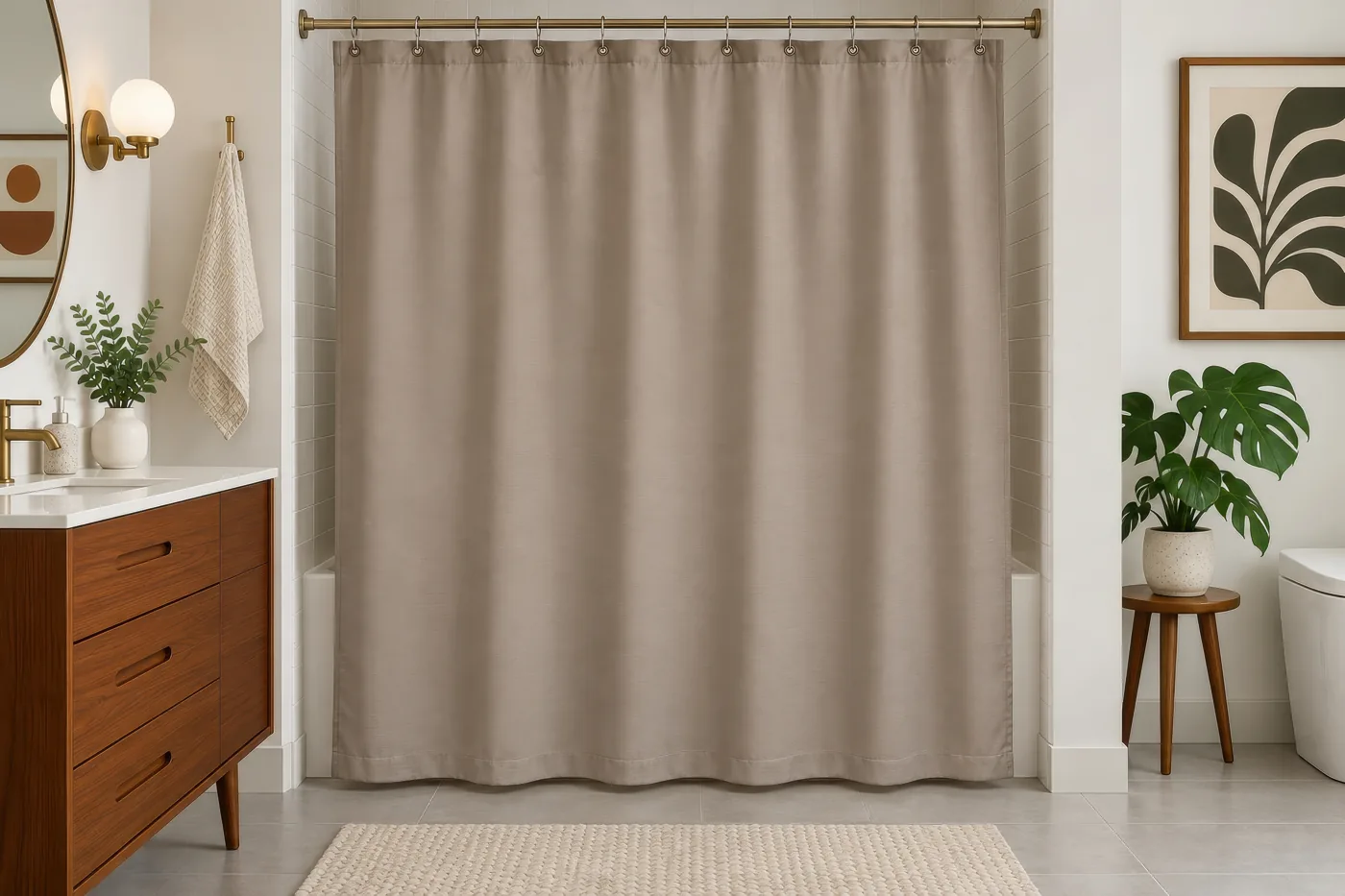
Choose bathroom wall art by checking the wall first, then the size and the style. Look for a position away from direct spray and recurring condensation, measure the complete framed piece, and use the room’s tiles, fittings or towels to guide the colours. A guest cloakroom and a busy shower room need different decisions.
YOUR FIVE-STEP ROUTE
- Wall find a drier position.
- Scale measure the usable space.
- Colour connect with one room finish.
- Format check the complete construction.
- Test try the outline before buying.
Placement map · Size examples · Colour ideas · Format checks · Buying checklist
Find the right wall before choosing a print
Walk into the bathroom and notice what you see first. The mirror may already be the main feature; a print can balance a quieter side wall instead of competing with it. Check the same wall after an ordinary shower, when steam, droplets and damp surfaces are easier to notice. A wall that looks dry before the room is used may behave differently afterwards.
GUEST CLOAKROOM
Make a small room personal
A room without a shower offers a different starting point from a steamy family bathroom. Try one distinctive print or a compact pair above a clear stretch of wall.
FAMILY BATHROOM
Prioritise the location
Choose a position clear of spray, towel contact and frequently wet surfaces. Good styling does not make an unsuitable material appropriate for that location.
LARGER BATHROOM
Let one wall lead
A blank side wall can carry the main artwork while the mirror and shower stay visually quieter. Check the view from the doorway and the basin before committing.
Above a toilet can work when the wall is dry and the piece does not interfere with shelving or maintenance. Leave room for the cistern lid to lift where necessary. Beside a mirror, compare the frame with nearby light fittings and cabinet doors. Avoid assuming that the wall above a bath is suitable simply because it looks attractive in a room photograph.
Choose a size that fits the clear wall
Measure the usable wall area: the space left after allowing for the mirror, tile trim, shelves, door movement and access to fittings. Measure the artwork’s outer frame as well. For a pair, include the gap. A bathroom usually gives you less uninterrupted wall than a living room, so a familiar sofa-width rule may not be a useful shortcut here.
| Planning example | Centimetres | Approx. inches |
|---|---|---|
| One outer frame | 40 × 50 cm | 15.7 × 19.7 in |
| Two outer frames with a gap | 25 + 8 + 25 = 58 cm wide | 9.8 + 3.1 + 9.8 ≈ 22.8 in wide |
| Clear wall strip | 80 cm wide | 31.5 in wide |
| Space left beside the 58 cm pair | 80 − 58 = 22 cm total | 8.7 in total |
25 cm frame + 8 cm gap + 25 cm frame
58 cm overall about 22.8 in
Centred on an 80 cm clear wall, that leaves 11 cm on each side. This is a worked layout trial, not a required margin or an available product size.
The inch figures are rounded independently; calculate using the original centimetres, then divide the total by 2.54. Trace the finished outer dimensions on paper and compare a single portrait print with a pair. Keep the template clear of the basin and check it from the doorway. Move the paper templates until the arrangement looks balanced before choosing the fixing positions.
A larger print gives you one clear focal point and fewer edges. A pair can suit a narrow wall or repeat a theme, but adds another frame and gap to manage. If the room already has patterned tiles, several accessories and a busy mirror, test one quiet piece first. For the wider buying process, see our guide to choosing art for your home.
Curated for this story
Shop the look
Considered artwork selected to complement the mood, palette and story.

Seascape Storm by Claude Monet Canvas Wall Art Print
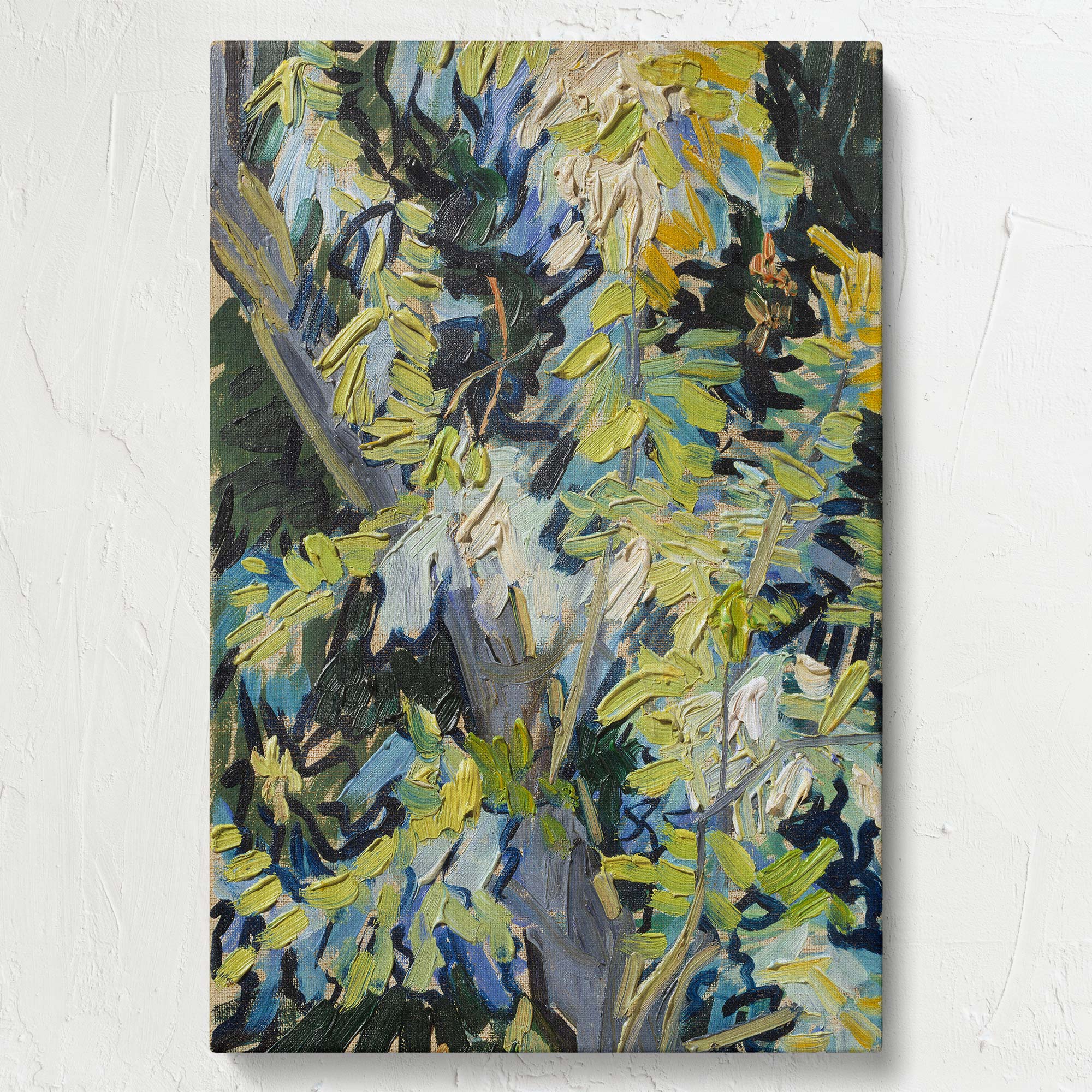
Blossoming Acacia Branches by Van Gogh - Botanical Flower Art Print

Roses - Green Vase Botanical Floral Painting By Vincent van Gogh

Modern Abstract Canvas Acrylic Colors And Ink In Water Art Canvas Wall Art
Build the artwork around the room’s colours
Start with finishes you expect to keep: tiles, flooring, cabinetry and metal fittings. Pick one connection for the artwork rather than trying to match every surface. The combinations below are design ideas to test in your own light, not universal colour rules. Screens, printing and room lighting can change how a shade appears.
SAGE · STONE · OAK
Soft botanical direction
Leaf shapes or a quiet landscape can echo green towels and warm wood. Choose a cream background if stark white paper feels disconnected from warm stone tiles.
WHITE · CHARCOAL · BLUE
Clean coastal direction
A restrained seascape can introduce blue without covering the room in seaside motifs. Black-and-white photography offers another route when the fittings already supply strong contrast.
SAND · TERRACOTTA · BRASS
Warm abstract direction
Simple shapes and a small rust-coloured accent can connect with warm metals or beige tiles. Keep enough pale space in the image to avoid crowding a compact wall.
If the tiles are heavily patterned, choose an image with simpler shapes or a smaller colour range. With plain tiles, the art can carry more detail. In a traditional bathroom, a botanical study or vintage-style landscape may connect with panelled cabinetry; in a contemporary room, clean abstract shapes can echo straight lines. These are starting points. Your preferred image matters more than assigning the room a rigid style label.
Funny bathroom wall art can suit a guest cloakroom, especially when the joke feels personal rather than generic. Test the words at normal viewing distance: a small print full of tiny lettering may be hard to enjoy. In a shared or calmer bathroom, a landscape, botanical or abstract piece may have broader appeal. Avoid choosing a subject only because it mentions bathing.
Compare formats without assuming they are waterproof
A material name alone does not establish bathroom suitability. The image surface, frame, backing and hanging fittings all matter. Canadian Conservation Institute guidance on works of art on paper describes moisture-related distortion and deterioration. A framed paper print still needs a suitable environment; glazing does not automatically make the assembly sealed or waterproof.
| Format | What to check before buying |
|---|---|
| Framed paper print | Ask about backing, glazing and suitability for the proposed conditions. Do not treat a decorative frame as a waterproof enclosure. |
| Stretched canvas | Check the surface and stretcher construction with the supplier. Ordinary canvas should not be assumed suitable for direct spray or recurring dampness. |
| Metal, acrylic or other panel | Check the specific product specification, edges, fixings and care instructions. The generic material name is not a wet-area rating. |
| Original or irreplaceable artwork | Choose another room if the conditions are uncertain. Decorative placement should not take priority over preserving a valued piece. |
General CCI guidance on paintings also advises considering environmental changes and direct sunlight. It is not a certification for contemporary canvas prints, but supports checking the location rather than assuming every artwork tolerates the same conditions. If the room repeatedly leaves the chosen wall damp, reconsider displaying ordinary prints there.
Use this checklist before you order
- Choose a wall clear of direct spray and recurring condensation.
- Measure the outer artwork and every gap in a group.
- Connect the image with one lasting room finish.
- Test the outline from the doorway and basin.
- Confirm the specific product’s construction and suitability.
- Keep access to cabinets, cisterns and fittings clear.
Before fixing the artwork, confirm the wall type, the finished weight and the fitting manufacturer’s instructions. A tiled wall may need a different installation method from painted plasterboard. Use appropriate fixings and check for services before drilling; obtain suitable installation advice if you are unsure. Adhesive hooks are not a universal solution, especially where surfaces become damp or the product instructions exclude that use.
Browse the bathroom wall art collection for ideas, then check the details of the individual piece against your chosen position. Being included in a room collection is a styling suggestion, not proof of waterproof construction. A considered print, a clear outline test and a suitable wall will give you a stronger starting point than filling every spare surface.
Sources and visual notes: CCI: works of art on paper; CCI: paintings. Checked 11 October 2026. The placement map and palettes are original editorial illustrations, not photographs, product previews or measured bathroom zones. Illustrative bathroom scene for styling inspiration.