
Choose bedroom wall art by deciding where you want to see it, measuring the finished arrangement and connecting its colours with the textiles you are keeping. Above the bed is one option; a dresser or a side wall may give you a better everyday view. Compare landscapes, botanicals, abstract work and personal subjects in the actual room before committing to a style.
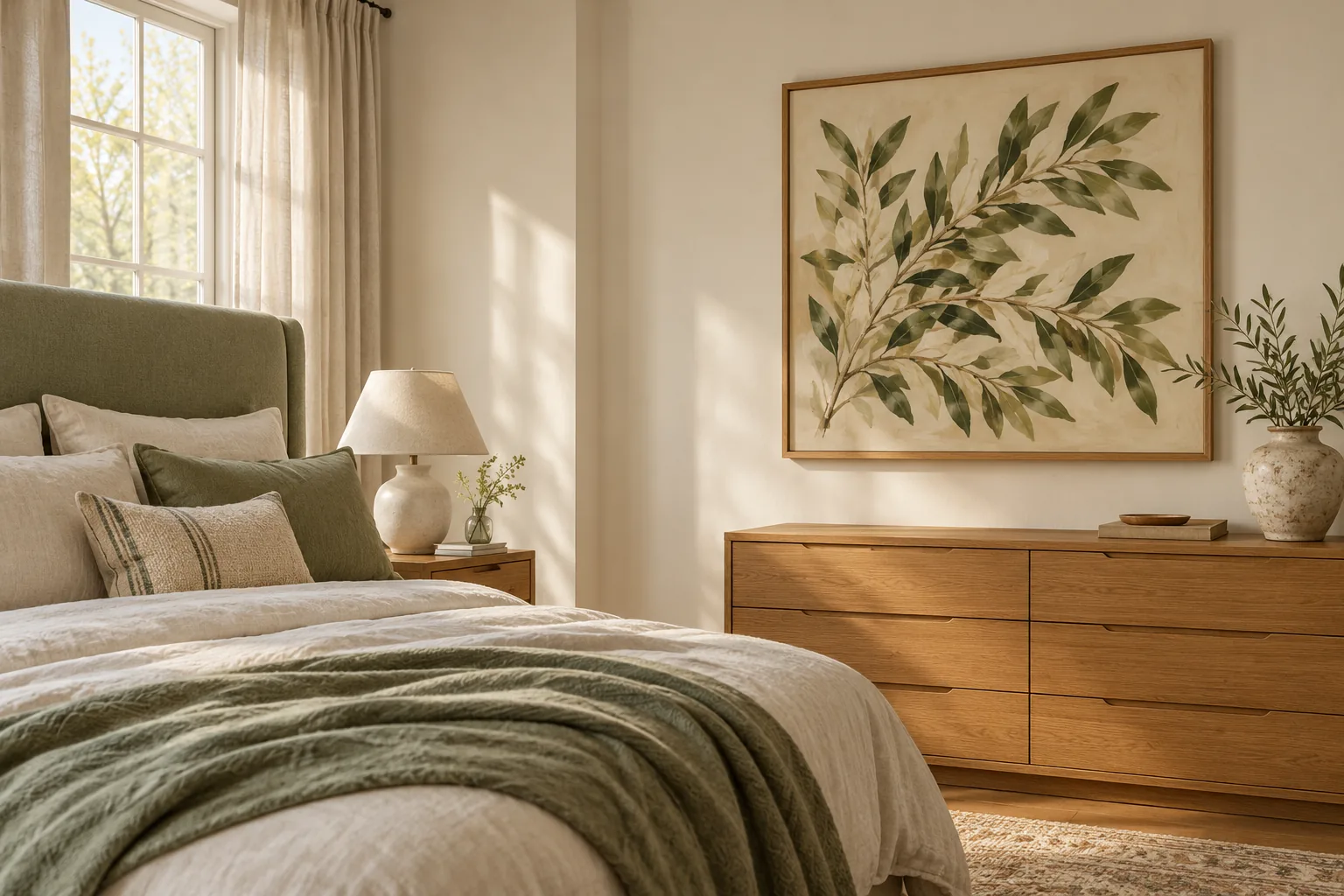
Illustrative room scene for styling inspiration.
YOUR BEDROOM ART ROUTE
- View choose the wall you want to look at.
- Size measure the complete finished arrangement.
- Connect relate art to bedding and furniture.
- Test compare daytime and bedside light.
- Check confirm format, weight and fixing.
Choose a wall · Compare sizes · Subjects and textiles · Placement checks · Buying checklist
Choose a wall from the doorway and the pillow
The wall behind a headboard often looks prominent from the entrance, but you cannot easily enjoy it while lying in bed. A side wall or the wall opposite the bed may provide a more useful view. Start by deciding whether the artwork should greet you when you enter, give you something to look at from bed, or complete a dresser arrangement. You do not need to fill all three positions.
HEADBOARD WALL
Make one clear entrance view
Compare the full headboard, bedside lamps and any wall lights as one arrangement. A tall upholstered headboard may leave less usable space than a low timber one. Treat fixing suitability as a separate decision before choosing this position.
OPPOSITE THE BED
Choose the view you live with
Look from your normal resting position as well as standing up. Check whether a wardrobe door, television or mirror already dominates this wall. A simpler composition may be easier to appreciate at this viewing distance.
DRESSER OR SIDE WALL
Use an alternative focal point
A dresser can anchor a picture without putting it above the sleeping area. Include a mirror, lamp and objects in the trial layout. Keep the artwork clear of everyday movement and any furniture that opens beneath it.
In a small bedroom, one deliberate arrangement can feel more settled than several unrelated pictures squeezed between storage. In a larger room, an empty wall can be useful breathing space. Start with the strongest view, then decide whether another piece adds something distinct.
Measure the headboard or dresser, then test the whole group
Use the furniture immediately beneath the proposed arrangement as a visual reference, alongside the actual clear wall. Measure its outside width rather than relying on a mattress label such as double, queen or king: those labels and the relationship between mattress and headboard vary. Include lamps, switches, sloping ceilings and door swings when identifying the usable area. These checks matter more than a universal artwork-to-bed ratio.
| Planning example | Centimetres | Approx. inches |
|---|---|---|
| Dresser, outside width | 160 cm | 63.0 in |
| One finished artwork | 100 cm wide | 39.4 in wide |
| Two outer frames plus gap | 45 + 10 + 45 = 100 cm | 17.7 + 3.9 + 17.7 ≈ 39.4 in |
| Remaining space when centred | (160 − 100) ÷ 2 = 30 cm each side | 11.8 in each side |
The numbers illustrate a comparison, not a recommended product size or a rule for every bedroom. Inches are rounded independently; calculate with the original centimetres and divide by 2.54 to convert. A mount and frame can change the finished dimensions. For a group, measure from the outside edge of the first frame to the outside edge of the last, including every gap.
Use paper templates of the shortlisted products’ actual outer sizes and position them temporarily with a method suitable for your wall finish. Look from the doorway, beside the bed and from your usual resting position. A picture can fit the available width yet feel cramped above a tall headboard. Our visual guide to choosing art for your home explains the broader sizing process; here, test the bedroom’s particular sightlines and obstructions.
Curated for this story
Shop the look
Considered artwork selected to complement the mood, palette and story.
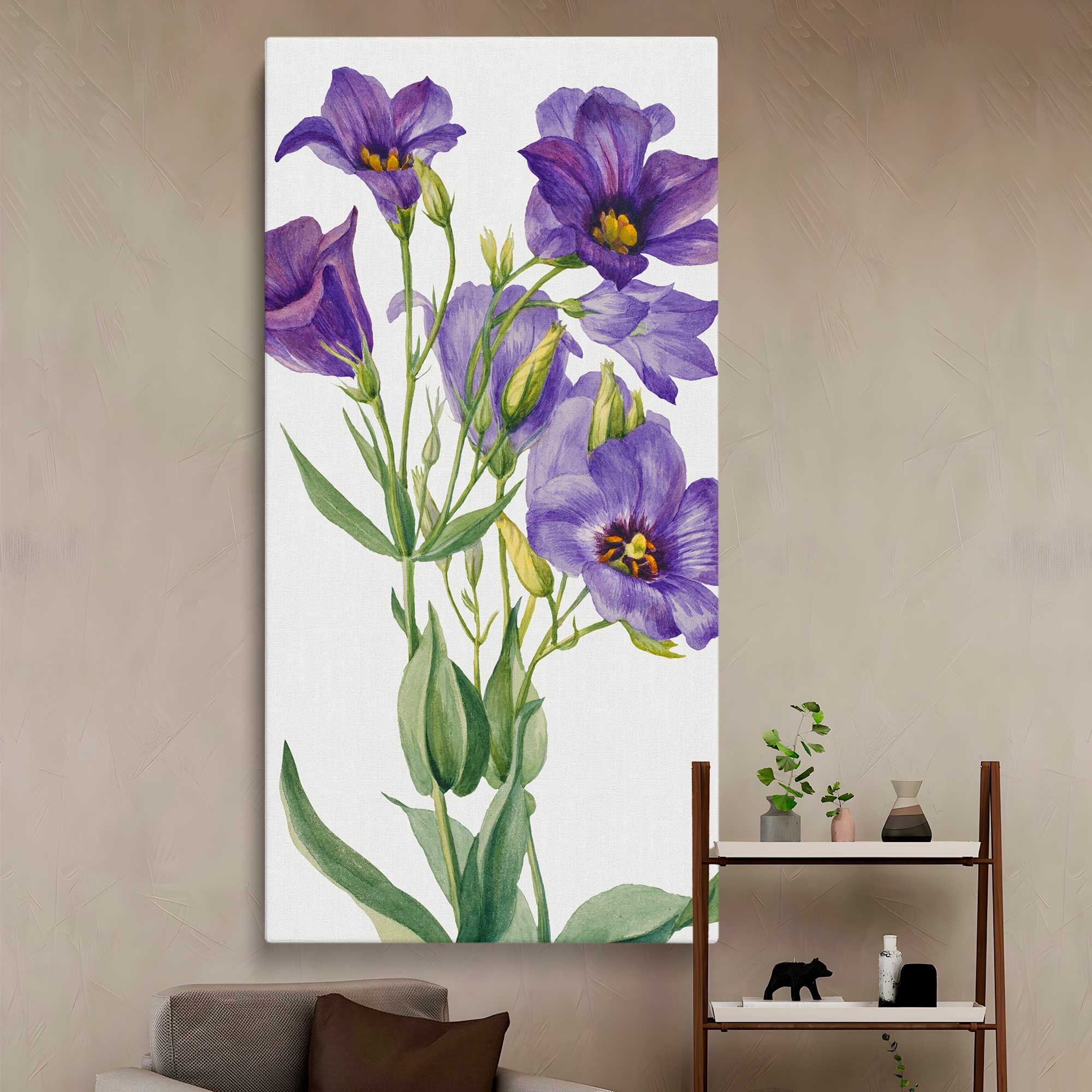
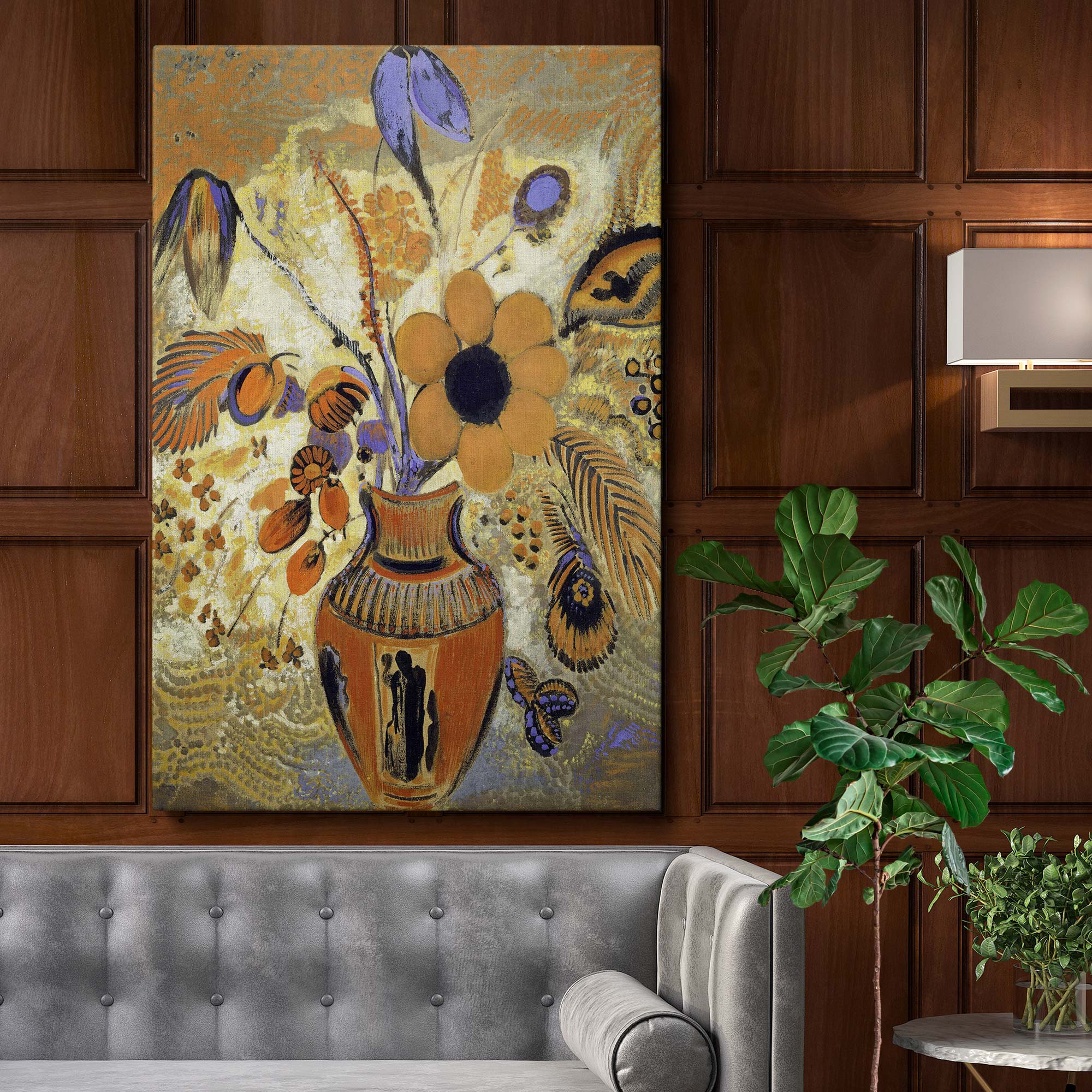
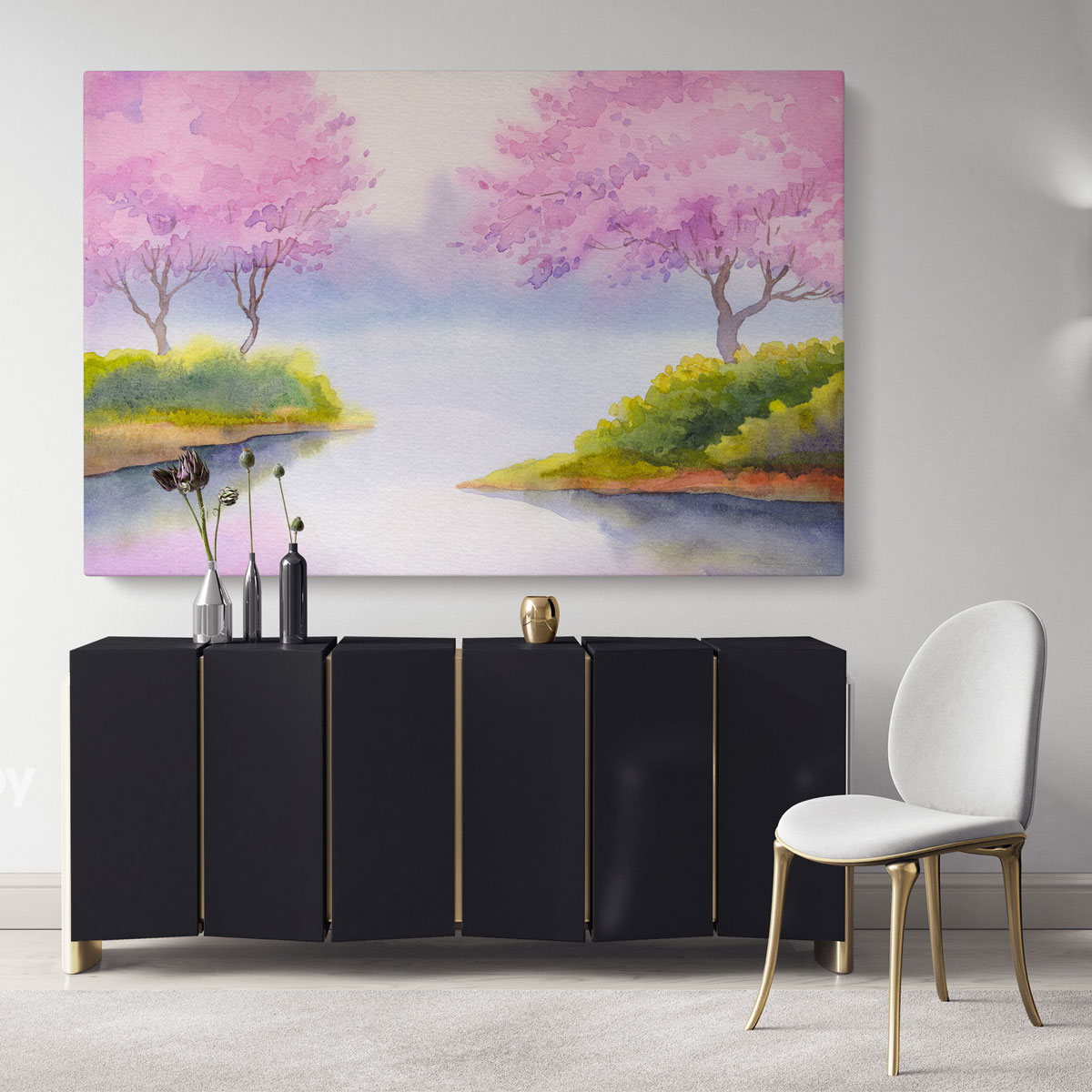
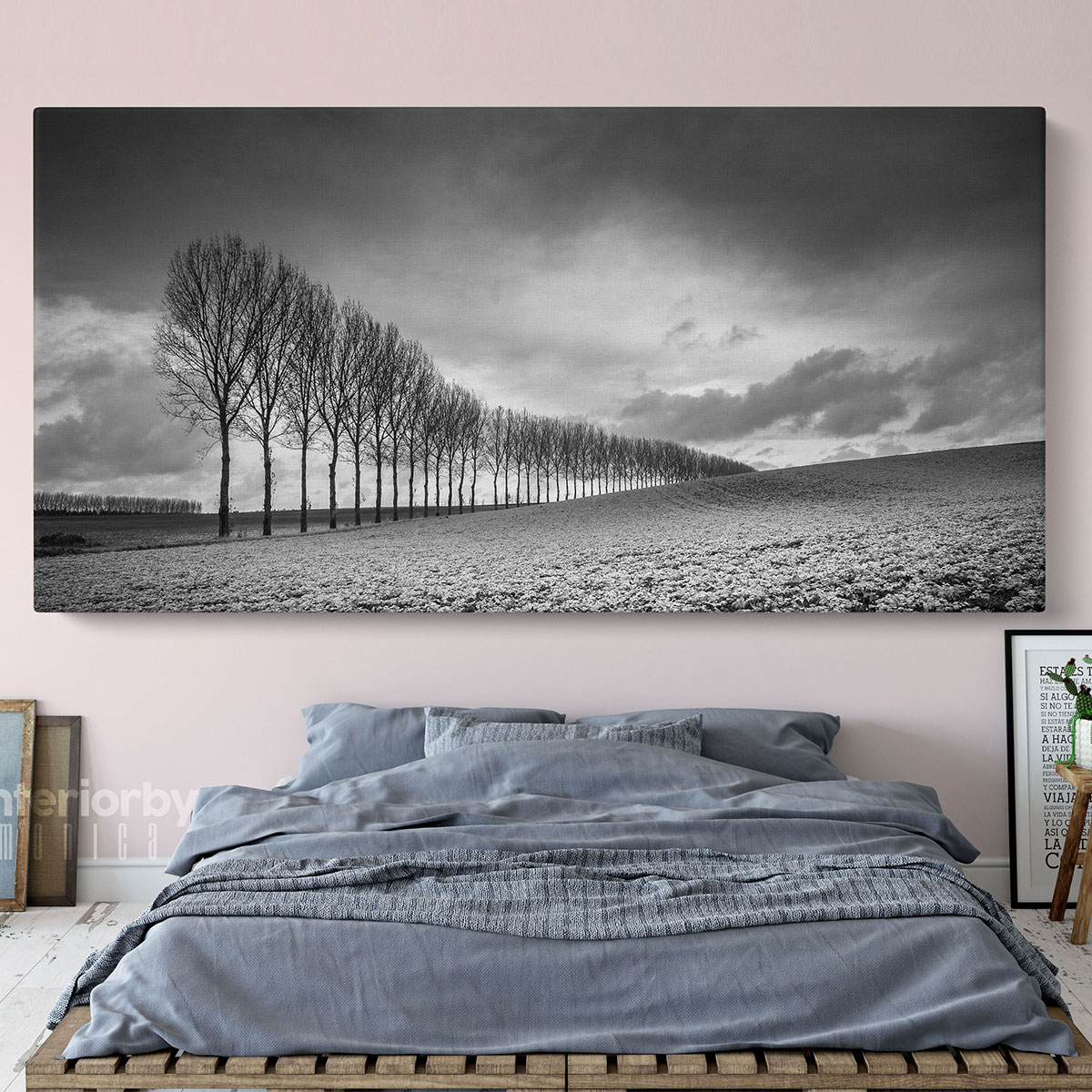
Connect the subject with the bedding you are keeping
Start with a subject you enjoy, then look for a useful relationship with your room. That might be a repeated muted green, the curve of a leaf echoed in a fabric pattern, or a warm frame that relates to timber furniture. Exact matching is optional. A room can have a restrained palette with lively art, or patterned bedding with a quieter picture. Describe the relationship you want before shopping.
| Artwork direction | What it can connect with | What to compare in your room |
|---|---|---|
| Botanical or floral | Leaf shapes, woven textures or a small colour in the bedding. | Compare the background tone and density of detail, not just the flower colour. |
| Landscape or seascape | A personally meaningful place, an open horizon or colours already present. | Check how clearly the scene reads from the bed and the doorway. |
| Abstract | A colour relationship, repeated curve or a contrast with patterned textiles. | Compare the energy of the marks and the strength of the light–dark contrast. |
| Photography or personal imagery | A subject or memory you want in this private room. | Check scale, crop and whether the tonal contrast competes with other focal points. |
QUIET TEXTILES
Let one detail carry the colour
With plain bedding, try artwork that picks up one existing textile colour and adds a second supporting tone. Keep a cushion or throw beside the shortlist to judge the relationship in your actual light.
PATTERNED TEXTILES
Compare the size of the patterns
A busy duvet and a detailed picture can compete, although the combination may suit your taste. Try a simpler composition or a different scale of pattern before assuming the colours are the problem.
SEASONAL BEDDING
Choose a lasting connection
If you change covers regularly, connect the art with something more stable: the wall colour, headboard, timber or a favourite recurring colour. The artwork does not need replacing every time the duvet changes.
For a period room, a traditional frame or historical subject can relate to mouldings and timber, while a contemporary image can provide an intentional contrast. For a modern room, compare an uncluttered arrangement with the furniture lines. Coastal, Scandinavian and other style names are useful starting points, but the room’s actual materials and your preferences should make the final decision. No subject or colour guarantees better sleep; choose a visual mood you personally enjoy.
Check light, clearance and the fixing before deciding on placement
Inspect the chosen wall with curtains open, then again with the bedside lights you use. A lamp can cast an uneven pool of light or reflect in glazing. A composition that looks detailed in daylight may read as one dark shape in the evening. Change the proposed location or format if the everyday view is disappointing; stronger lighting is not automatically the answer.
The Canadian Conservation Institute’s painting-care guidance identifies direct light, local heat and physical damage as display concerns. It is conservation advice for paintings, not a durability test for printed canvas. As a practical check, avoid obvious direct-sun hotspots, heaters and positions where furniture or doors can strike the picture. Read the care information for the format you are buying.
Considering art above the bed? Choose the location and fixing together. Use hardware suitable for the wall construction and the complete artwork’s weight, and follow the exact product instructions. 3M’s Command Picture Hanging Strips guidance specifically says not to hang these strips over beds or on wallpaper. That restriction applies to the strips covered by that guidance; it is not a test of every fixing system. Check the instructions supplied with your UK or US product. If the proposed installation is uncertain, choose another wall or obtain advice from a suitable installer.
Keep the artwork clear of headboards that move, opening wardrobes, curtains and bedside objects. There is no single clearance that makes every arrangement suitable: the furniture, occupants and fitting method all matter. Do not infer a safe installation height or fixing method from an interior mockup.
Compare the actual format before you order
A canvas, an unframed paper print and a framed print can give the same image a different presence. Compare the selected product’s actual outer size, edge treatment, frame or mount if supplied, glazing if present, weight and care instructions. Do not assume a styled room image establishes what arrives in the parcel. A wide landscape and a pair of smaller botanicals may both suit your palette, yet require different layouts and fixings.
Use the bedroom wall art collection to build a small shortlist, then compare each live product’s options with your measured wall. If your preference is a quieter palette with stronger tonal definition, our black-and-white wall art guide explains contrast, subject and framing choices in more detail.
Your bedroom artwork buying checklist
- Choose the doorway view, the view from bed or a dresser as your main focus.
- Measure actual furniture and finished artwork; include every gap in a group.
- Connect the subject with a colour, shape or material you already enjoy.
- Compare the shortlist with both everyday bedding and bedside lighting.
- Check wall construction, full weight and exact fixing instructions, especially above a bed.
- Confirm the product format and care details before ordering.
A strong bedroom arrangement starts with a clear view and a deliberate relationship to the room. Keep a small shortlist, test the actual outer sizes, and choose the picture you enjoy looking at in the light you use every day.
Sources: Canadian Conservation Institute: basic care of paintings; 3M: Command Picture Hanging Strips instructions. Checked 21 October 2026. The diagrams and worked dimensions are original planning examples, not catalogue sizes, installation specifications or tested product claims.